
Training Ourselves To Be Loveless
In conversation with Rusty Reno

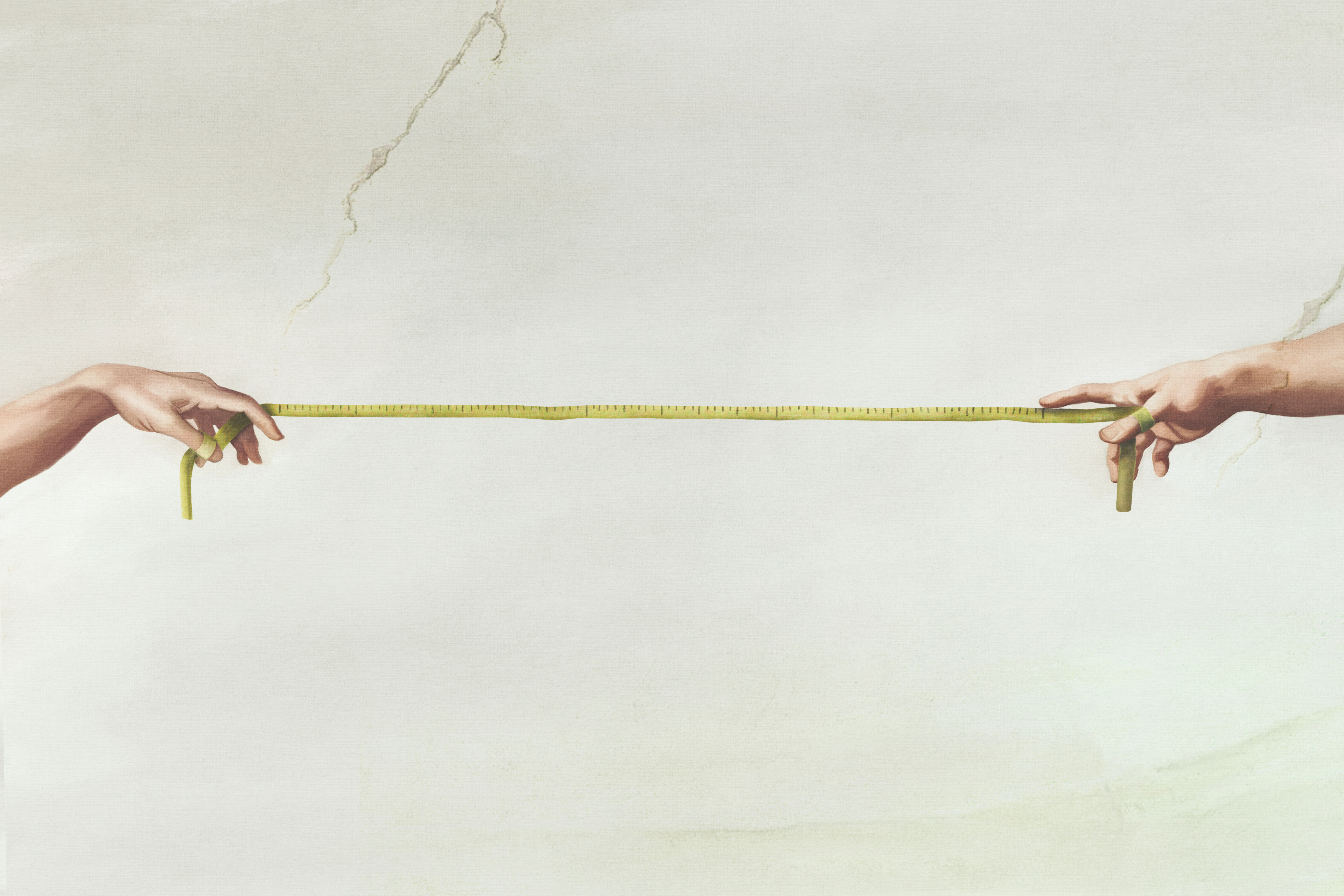
Rusty Reno is a theologian, author and the editor of First Things magazine. He is always an arresting writer but at his best, I think, when he talks about taking risks and restoring love.
This conversation is about how to stop being afraid to love. We spoke about therapy culture and the line between healthy introspection and risk-aversion; whether we are ever “ready” for a relationship and what we lose if we wait too long; the fear of choosing the wrong person, and how to know the difference between taking a risk and being reckless. I think there are a lot of young people like me who have grown up surrounded by a fear of love, and by older people anxious for them and traumatised by their own heartbreak. If you are tired of red flags and warning signs, if what you need is the opposite—permission to go for it, to follow your heart—then this is for you.
I usually paywall these conversations but Rusty writes so beautifully, and reading this was so reassuring to me, that I felt it had to be free. If you enjoy, I encourage you to buy his book instead!
Here’s our conversation, I’d love to know what you think.
Freya India: Rusty, in Return of the Strong Gods, you argue that the post-war consensus taught us to fear passionate loyalties, and to develop a posture of openness and detachment. Our mutual friend wrote earlier this year about the return of American strong gods, a “renewal of strength and vitality”.
But somewhere I don’t see this revival is in relationships. While national loyalties might be returning, interpersonal loyalties seem to be weakening. Among my generation, especially among young women, I think there is a deep fear of wanting too much, of making a mistake, of hurt and heartbreak. And I think a lot of relationships are failing now because of this half-heartedness. We don’t believe love will last, so why take the risk? The pressure today is to pretend we don’t care. Even if we enter into relationships, we are always half-defending against loss, one foot out the door, our hearts never fully in things. Risk-aversion is killing romance.
We are, as you put it, “training ourselves to be loveless.” Yet you warn that “A life without love is a greater evil than a life in which finite loves are made absolute”, and that “We must take the risks of commitment if we’re to revive the greatness of the human spirit.”
So my question is, how can we learn to take risks in this “love-deprived age”? I ask this not as a writer but as someone of this generation who genuinely needs reassurance and consolation. What would you say to young people like me, who have always been taught to play it safe, and are afraid to love?
R. R. Reno: I suppose the first thing to say is that love is always frightening, because it is dangerous. Achilles loved glory, so much so that he was willing to forsake a long life. Oedipus delighted in knowing, which got him into trouble. Romeo longed for Juliet, and we know how that turned out. And at a more quotidian level, love can be misdirected. We can love the wrong things in the wrong way. This is the essence of idolatry.
So, there are lots of reasons to be anxious about love and its disruptive power. “Love cannot be idle in the soul,” writes St. Augustine, “It must necessarily cause movement.” In small things, that’s not a big deal. I love a good cup of coffee, so I rouse myself to go to the kitchen. But in more consequential matters, love moves us toward something unknown. I love my country, so I go into battle, not knowing my fate. Or I fall in love with a woman–or God. Who knows where that will take me?!
In Return of the Strong Gods, I tell a story about the political and cultural anxiety that has shaped so much of our lives. Deeply affected by the unprecedented violence of the two world wars and fearful of ideological passions that can so easily become deadly, after 1945 leaders of the West counseled a coolness of heart that too easily slides into nihilism. If nothing is worth fighting for, nobody will fight–that’s an alluring promise.
There were other factors as well. Modern science and technology has given us a sense of mastery over the contingencies of life. Why not extend this mastery and achieve control over society and our turbulent inner lives? In the United States, the 1950s was a time of great confidence in the power of social science to deliver new and effective methods for organizing and managing society. It was hoped that this would replace the always uncertain (because human) give-and-take of partisan politics. In that decade, Sigmund Freud and other psychological theorists became extremely influential. They promised great advances in the management of our souls.
In this technocratic and therapeutic world, which has only grown more powerful and all-encompassing, love’s uncertainties, its power to propel us toward destinations unknown, can easily seem reckless, foolish, irresponsible. Better to live a carefully “curated” life, or so we imagine.
But there’s something deeper going on. When I was a young college teacher, I pondered the risk-aversion of my students. I read Lucretius and Epictetus. They formulated an ideal for life: ataraxia, which can be translated as “calm”, “peace of mind”, “serenity.” We achieve this condition when we still the impulses that rouse us to pursue ideals, ambitions, and loves.
We should not underestimate the appeal of ataraxia. It allows us to be quiescent and without care (“carefree”!), safe and at peace with our lives. Self-acceptance, self-care, and other therapeutic exhortations aim at this condition. Love, therefore, becomes an enemy, for it dislodges and moves us. Of course, to live is to change. Thus we opt for something akin to peaceful immobility, which is tentative and careful movement through life.
How do we escape this condition? Perhaps the first step is to look around. I live in New York. The city is full of men and women, especially women, who are the age of grandparents, but who glide along the sidewalks dressed like teenagers. Isn’t the sight pathetic? To pretend against the realities of embodied life as we move toward the grave? Or just take in the sadness, the depression, the addiction, the loneliness, the aimless wandering that seems endlessly circular. Do we really want to live this way?
The next step is to venture something for something or someone, which means taking a step away from ourselves. In Plato’s Symposium, Socrates describes a “ladder of love.” We can seek the first rung, the music we love, the poem that moves us, the place that tugs at our hearts, the craft or sport or hobby that commands us and demands our free time.
When I was 18-years-old, I went to Yosemite to go rock climbing. It was there that I learned about love, the desire for mountain adventure that dogged me for decades, claimed the lives of some of my friends, and gave me incalculable joy. And while pursuing this passion, even in its first stages, the stern goddess who demanded so much from me–mortal danger!--whispered often, “Love me, yes, but seek more.” She sent me up the ladder of love.
The wounds of the heart cut more deeply than those of the flesh. Loss, abandonment, and betrayal hurt deeply, sometimes more so when we are the ones who abandon and betray. I don’t want to make false promises. But of this I am confident: Love will not leave you alone. It will spur you, drive you, pull you. It delivers you from captivity to yourself. If you wish to go anywhere of consequence for the soul–and I do not mean to Paris or Mallorca–you must risk love.
That’s such a beautiful way of putting it. It also touches on a theme you keep returning to in the book, that risk-aversion is against our nature. That “the deepest failure of the postwar consensus” is that it teaches us to be “something less than human.” That even if we make a mistake, “to love wrongly is dangerous, but however debasing, it is human.”
Something I also find deeply inhuman is the therapeutic culture that has replaced these strong loves. In the book you argue that in place of “passionate loyalties” we developed “a spirit of critical questioning.” Today that spirit is turned inward. We are encouraged to interrogate everything about ourselves: every emotion, thought, memory, decision, personality trait, has to be scrutinised and examined. This is Lasch’s “culture of narcissism” - as the world feels more unstable, and long-term commitments feel out of reach, we retreat inward.
You also write that “Liberalism offers no vigorous language of love.” Into that void, I think, has rushed therapy-speak and psychological jargon. Our commitments and devotions are now framed as pathologies and deficiencies. Strong loves become attachment issues; sacrifice and compromise become “people-pleasing”, “emotional labour”, or evidence of our failure to “set boundaries”. The same way strong loyalties to place and tradition are reflexively labelled as backward and bigoted, strong loyalties in relationships are pathologised as “insecure” or “codependent”.
So, I wonder, do you see the rise of therapy-speak and this constant self-scrutiny as a continuation of the post-war consensus, an attempt to avoid the dangers of strong commitments by turning inward? How much of this therapeutic culture do you think is useful? And where, do you think, is the line between introspection that helps us love better, and introspection that keeps us from loving at all?
Traditional cultures have disciplines of self-examination and self-correction. Christianity encourages careful scrutiny of motives, which are often perverted by sin. Ancient Greek philosophy was not an “academic” exercise. It sought to train our emotions as well as our intellects. Introspection can guide and purify our loves. This is a necessary task.
To some degree, modern psychology can aid in this task. T. S. Eliot has a telling line about the modern condition: “Distracted from distraction by distraction.” At least the therapeutic imperative requires us to stop and think about our lives.
Moreover, we often fail to love those whom we love. We are lazy or self-involved. We are nervous or depressed or crippled by anxiety. There are many ways in which the defects and deformities of our souls impede us, even when we have the best of intentions and our hearts are true. There’s no question that the therapeutic setting can provide help in overcoming or moderating these impediments to love.
But I’m influenced by Philip Rieff. He observed that modern psychology aims for technocratic management of the soul. Its goal is to moderate or release the weight of obligation and demand, making more space for the individual to be at peace with himself (again, ataraxia).
Christianity has a very different understanding of inner peace (as do the philosophies of Plato and Aristotle). “Purty of heart,” says Kierkegaard, “is to will one thing.” Put differently, a soul at peace with itself is a soul given over to an indomitable love, for love commands, and when its commands are deeply felt, our inner life is gathered into a coherent and purposeful whole.
In my experience, a child commands its mother in a special way. Maternal love burns away a great deal of selfishness and distraction. Of course, mothers often fail. But for most, there are moments, however fleeting, of great concentration of affection and intention, which are felt as a kind of purity of heart, an inner peace that comes when one’s entire self is gathered by love’s power. The mother is not introspecting or wondering about motives. The past and future fall away as concerns.
So I would say that, yes, love requires reflection. Are my loves honorable, fitting, properly ordered? Have I sought to drive from my soul the impediments to love? Have I made the preparations necessary so that I may love well and in a way that does not betray my duties and obligations to others? There are many questions like this. Moreover, love seeks the good of the beloved, and this often means pondering what those you love need and deserve. But love itself concerns the will, not reason. Therapeutic interventions and other modes of reflection can correct, moderate, or encourage love. But they cannot spark it. At some point we must feel the warm tug of desire and risk obedience to it.
The best psychologists and therapists honor this risk. But they, like us, live in a culture that shrinks from obedience. We cannot imagine that our hearts long to serve. So we redescribe the risk as an inner drama: “Is that what I really want and desire?” But this is false. Even the most halting semi-commitments of today’s ill-defined relationships carry us toward something not yet real, a future contoured by love’s demands, even as they are shirked, for that, too, is a kind of future.
The risk is not in deciding whether to love, which in any event is a foolish way of thinking about love. As I have noted, love desires rather than reasons and deliberates. Rather, the risk of love rests in becoming something other than who you now are. And so we come back to ataraxia. I think people fear love, because they fear becoming someone whom they do not yet know. To repeat, love commands, which means that love will make me into someone other than the person I would be if my life were solely under my command. For some, that’s a very frightening thought, a loss of control. I count it as love’s great blessing. As St. Augustine queried, “What am I but a guide to my own self-destruction?”
Again, love can be misguided, neglected, and abused. It, too, can wreck destruction, so by all means examine your loves. But remember, only love can make us anew. It is the engine of self-transcendence.
This fear of love seems especially intense for my generation. My worry is that healthy self-examination and introspection has now hardened into a belief that we need to perfect ourselves before we can love. There’s this sense that we have to be fully ready for things, that there’s something reckless about falling for someone, getting married, having children, committing to anything at all, when you’re young. These things are often seen as careless now, not courageous or passionate. The wisest person is the one who waits longest.
And so we delay things until we feel fully ready. We are suspended in a state of constant preparation, trying to solve ourselves before we meet someone. Instead of believing that love turns us into someone new, we believe we must become our “true selves” before we find it—fully healed and self-sufficient. Which is a tragedy, because as you say, love burns away the worst parts of ourselves. I find it sad to see so many young people in therapy and watching all these self-improvement podcasts and trying to think themselves into being better when really, committing to a relationship, taking on responsibilities they aren’t completely ready for, taking a brave step toward someone when they are still incomplete and unsolved, might turn them into who they want to become.
Is this fear of not being ready new? Or is this just how young people have always felt? I think of my grandparents, who grew up just after the war, married at eighteen during difficult times in their lives, had children young without having everything figured out, and who would find the idea of waiting until you are “ready” hard to make sense of. If this is new, then, where do you think it comes from? What changed to make us think we need to be complete before we take on the commitments that might actually complete us?
I have a vivid memory of a conversation. It took place during the first week of my freshman year at college. For some reason, I brought up the fact that a girl I knew in high school got pregnant and had a child when she was seventeen. The girls in our conversation lamented, “But she’ll miss out on so much.” I thought about this claim. They had in mind travel and other kinds of experiences. I replied, “That can’t be right. After all, we’ve already missed out on the experience of being a parent at a young age.”
I’m sure that I made the comment because the year before I was wandering around the United States. During a long bus ride from Fort Morgan, Colorado to Baltimore, Maryland (where I grew up), I sat next to a cheerful woman who, after an hour or so, looked up from her knitting and engaged me in conversation. She was going to Chicago to spend time with her daughter and grandchildren. This surprised me, because she did not look very old. I asked her how she had been when she had her daughter. (That was a rather brash question, but she took it in stride.) “Sixteen,” she said. I asked how old her daughter was when she had her first child. “Eighteen,” she reported. So this cheerful woman on the Greyhound bus had been a grandmother at 34! We chatted more. She was looking forward to the touch-football game on Thanksgiving Day. A heavy-set woman barely five feet tall, she reported that her role was to play center and take up space on the line of scrimmage. “I’m good at that,” she cheerfully reported.
The conversation obviously made a big impression on me, since I remember it nearly 50 years later. I dimly saw a life that was already out of reach for me. I wasn’t jealous. I felt something like awe. What is it like to be a grandparent before turning 40?! And then great-grandparent when you’re only just reaching retirement age!
My mother often said, “You don’t become an adult until you have children.” In that long-ago conversation in our dormitory, my college friends were male and female. But we were overgrown adolescents. That’s not necessarily a bad thing. Putting off adulthood can be a useful luxury. But spending a year-abroad in Europe during college, or hanging off cliffsides and doing an advanced degree (my path) is not somehow a richer experience than playing tag football with your grandchildren.
I don’t want to be misunderstood. Talents differ. Passions differ. Someone from my social-economic background is hard-wired for a certain level of worldly accomplishment. (Three of the four of my parents’ children ended up as college professors, which was not a coincidence.) But I must report that neither my heroic climbing ascents nor advanced degrees made me imagine that I was “ready” for marriage or “ready” to be a father. In some ways the opposite was the case. In any event, I did not undertake self-examination to weigh my “readiness.” I wanted to get married to my now-wife. That seemed to be a good enough reason at the time.
I think this notion of “being ready” really means “being safe.” As you point out, a risk-averse attitude lurks behind what seems like a reasonable desire to become a better, more self-disciplined, and well-rounded person. Being settled in your career, having financial independence, gaining therapeutic guards against “toxic” relationships, and so forth–these attainments make serious relationships seem less frightening.
I sympathize with the impulse to “be safe.” I grew up as no-fault divorce was sweeping through middle-class marriages. By the time my peers were thinking about marriage, the institution was less trustworthy. Things have only gotten worse. By all accounts, wide-spread exposure to pornography has severely damaged relationships. Life mediated through smart phones has triggered mental health problems. Our economy has become too much like a lottery, making the future more insecure. My heart goes out to young people. There is more risk, and love is harder to find and trust.
But “being ready” won’t make love easier, and waiting, waiting, waiting is itself a very risky strategy. We can get used to being alone or being in superficial relationships. We play like we practice, which means that if we’re striving to become complete before making commitments and taking risks, then it is only too likely that we’ll have developed a personality that does not need, or even want, the kinds of deep relationships that change us.
You say that love commands, that the ultimate risk of love is becoming someone other than who we are. I think today we are not just fearful of this change but often interpret it as a sign we are with “the wrong person”. The right person will slot perfectly into our lives, require nothing from us.
Online, relationship advice is almost entirely about avoiding the wrong person. We have all these “red flags” to remember, warning signs to watch out for, TikTok influencers sharing lists of toxic traits, Reddit forums full of advice to break up. In some ways this feels like a product of the post-war consensus, this instinctive distrust and impulse to give up on each other. And I think it has left many young people unable to tell the difference between a genuinely bad relationship and the very normal fears that come with love, the ordinary terror of letting someone into your life and being changed by them. So I suppose my final question is, do you have any advice on knowing the difference? How can we distinguish real warning signs that someone isn’t right for us, from a fear of falling in love and losing control?
The Christian tradition has a list of deadly sins. One of them is sloth, but that English word can convey the wrong sense. In Greek, the word is acedia, the literal meaning of which is “without care,” not in the sense of cheerful indifference, but rather as a condition of heartlessness. Perhaps the better English word is despair, which paralyzes and demoralizes.
In early monastic literature, the sin of acedia was said to stem from the attacks of the “Noonday Devil.” He comes at mid-day, when morning devotions are done, and the day is stretching ahead. The Noonday Devil whispers, “You’ve made no progress in the spiritual life. Your ambition to love God is too unrealistic. His love is too demanding. Be sensible. Give up.”
That counsel is very much abroad these days. You go to university with a naive but heartfelt love of literature or philosophy, and what do you encounter? You have a patriotic love of England, and what are you told? The postwar consensus emphasizes the dangers of these and other loves. When you think about it, our culture as a whole is a lot like the relationship Reddit forums you mention. It is constantly advising us to be on the watchout. It’s full of warnings about toxic influences and histories. Patriarchy. Colonialism. Heteronomity. What is Michel Foucault other than someone always on the look out for ways in which we are manipulated and dominated? Is it surprising that all of this has spilled over into romantic life?
The desert monks thought that acedia was the most dangerous of the deadly sins. Pride is the sin of self-love. Lust loves sensuality too much and in the wrong way. Greed is a misguided love of money. But at least these are sins of love, however misdirected! Acedia is loveless.
I wish I could convey sage advice about today’s relationships. I came of age on the cusp of a transition. The old assumption that normal people married and started families was still in force, at least to a significant degree. The big question was who, not when (although that was on our minds), and certainly not whether.
All you need to do is read Jane Austen or Henry James to be reminded that the who question has always been a daunting one. Literature sometimes depicts women who are too picky. They wait too long and age becomes a liability. They’re no longer the youthful women that the desirable men want to marry. Or literature depicts women wrongly matched. In Pride and Prejudice, Lydia Bennet runs off with George Wickham, and it turns out badly. The problem was not that she was young and “not ready.” She chose poorly, and given her character, it’s not clear that she’ll ever choose wisely. There are plenty of more mature figures in literature, who, like Lydia, end up mismatched. That’s the tragic fate of Elizabeth Archer in The Portrait of a Lady.
So, there’s something timeless about today’s relationship advice. But the anxiety today is very intense. As you point out, concentrating on what can go wrong–the Foucaultian suspicion– can lead to the conclusion that the “right person” is….nobody. Or, as you suggest, the same relentless concern about what can go wrong can lead to the demoralizing conclusion: “I’m not the right person.”
Things are broken, very broken. You’ve written about the crazy echo chamber that disorients us. But we need to be clear-minded about our predicament. We can’t out-pyschologize or out-manage our therapeutic and technocratic age. The clock keeps ticking. All of us must plunge ahead. There’s no way to eliminate risk. When we stop, analyze, calculate, weigh, we’re missing out. Sometimes that’s OK, but as a long-term strategy, it’s a recipe for an empty life, not a complete one.
Pascal was a brilliant logician. He recognized that as the stakes of a decision rise what counts as reasonable changes. You’d think that this means painstaking deliberation. But that’s not always the case. If I’m being chased by a knife-wielding madman, then it’s eminently reasonable to risk disaster as I rush without hesitation across a rickety bridge to safety. (Pascal gives an example like this.) Love is more like imminent danger than an abstract possibility that we can ponder at our leisure.
I think we’ve all experienced moments of romance that flare up in front of us. I don’t just mean relationships. The romance can be with a vision, a dream, a pathway through life. We remember them. They framed doorways through which we could have walked–and we didn’t, at which point the drumbeat of time has carried us onward, and they have become smaller and smaller in the rearview mirror. The flames of love burn brightly, but not forever, unless we meet fire with fire.
When I was an undergraduate, I had lunch with a visiting professor. He asked me what I planned to study. I said that I was not sure, and my interests were varied. He gave me a stern look: “Do you think you’re immortal?” I think young people are right to recognize the danger of rushing across rickety bridges. But hesitation and clinging to “optionality” have their costs, and they can be steep. My counsel is to keep that fact in mind, the fact of our finitude, the fact that we can’t be grandparents at age 34 and college professors, or married with children and middle-aged clubbers, or any number of other things. We have to take the risk of that path, that person, that vocation, that love.
It’s tempting to think that risk is bad. That’s the sentiment behind safetyism. But without risk there is no adventure. The German Romantic poet Friedrich Hölderlin penned a famous line: “Where there danger is, there also grows the saving power.” Love is dangerous, and the peril cannot be separated from its saving power.
Loved this conversation, Freya and Rusty. Thank you.
Great advice in this interview. It reminded me of Eliot's "The Hollow Men", a poem that was very influential to me. As I've gotten older the distinction becomes obvious between my acquaintances who feel strong passions in life, versus those who chart only the safe course.
Today's culture on college campuses and workplaces is unforgiving toward mistakes of a certain kind. So some of this risk aversion is rational these days. I feel fortunate to have grown up when there was more freedom to do crazy things and make mistakes.