
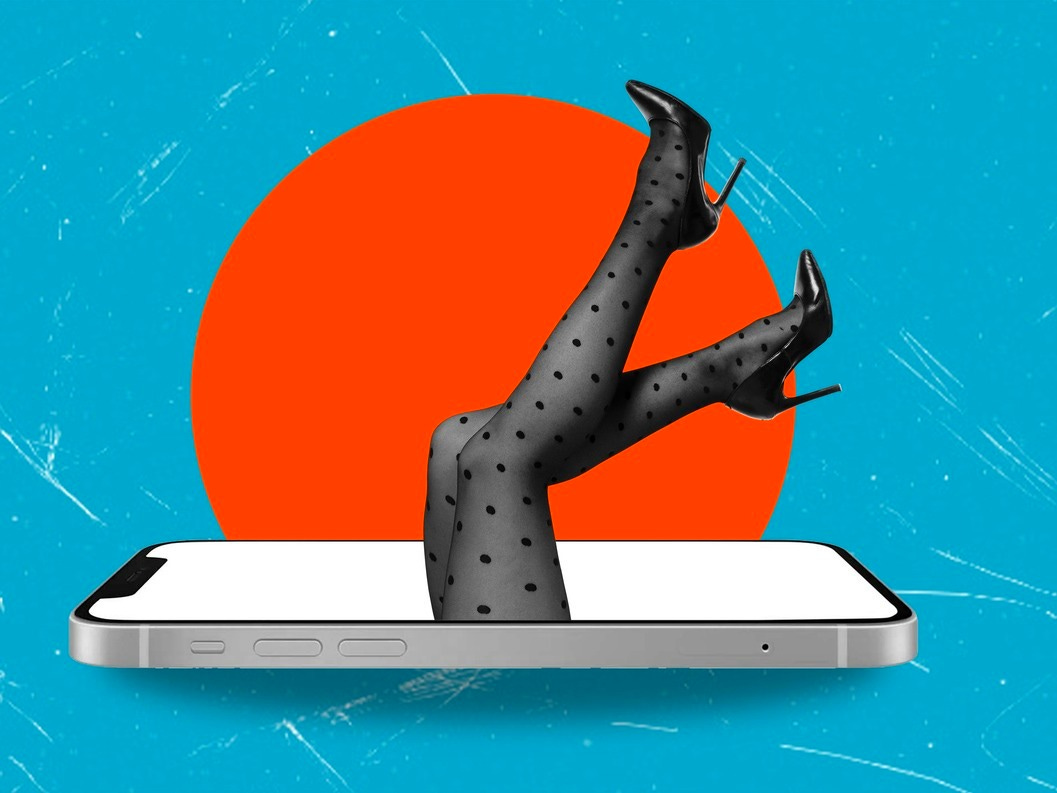
How Social Media Feminised Us All
It turned us into teenage girls
Something feels painfully familiar about the way we act and communicate online lately. Things feel more petty, catty, anxious, adolescent, as though everyone is more immature, more prone to emotional outbursts. I left my all-girls school years ago. I open X and I’m back.
Helen Andrews recently argued that society has gone through The Great Feminisation, and there’s something to this. I agree that social justice culture has stereotypically feminine attributes, that there has in many ways been a feminisation of the workplace. But I think some of the behaviour changes she describes, especially a rise in emotional reasoning and covert competition, are the result of something else. The problem is not that women entered the workforce or certain professions. More than that, in the early 2010s, we all entered social media.
For years I’ve written about how these platforms exploit girls’ and young women’s vulnerabilities for profit. And how they exploit our vices too: passive-aggression, reputation-destruction, social exclusion, vanity. I argue that social media rewards stereotypically feminine traits, that features on apps like Instagram and TikTok tap into and amplify them. For a long time, I thought this was a problem for girls.
But now I think things are worse than that. These platforms encourage everyone to act this way, tempt us all toward this behaviour. More than wokeness, more than left-wing or right-wing, something is happening in all online circles, in every direction, to all different types of people, to every kind of influencer. It’s happening, in short, to people who use these platforms.
This is, of course, Postman’s idea that technology is ideology, McLuhan’s the medium is the message. There are plenty of thoughtful, measured and mature people online, but that’s not the nature of these platforms. Mary Harrington puts this best, arguing that social media is “structurally feminine”, the technology itself feminising. That is to say, more often than not, these apps bring out stereotypically feminine traits in their users, no matter their sex, age, or politics.
Wokeness, for example, is described by Andrews as “feminine patterns of behavior applied to institutions”. But the movement really began to take force in the early 2010s, right as we all got smartphones and social media. Basically we began to communicate political ideas, for the first time, on platforms that reward emotion, rumination, and indirect aggression. And it wasn’t only progressive politics that changed. Discourse around everything became more deranged and extreme: dating, relationships, beauty, ageing, mental health, parenting, religion. In Andrews’ episode on TRIGGERnometry, for example, Konstantin Kisin asks why the new media podcast space has become so irrational, so uninterested in truth, even when it seems so masculine. I think this is why. The problem is the platforms, and who they turn us into.
Importantly, though, I don’t think they turn us into adult women. Some of the heaviest users of social media are adolescent girls. Teen girls are more likely to say they spend too much time on these platforms, and that giving them up would be harder, than boys the same age. Maybe because these apps are stereotypically feminine, or because they began to cater to one of their biggest user bases, designing features that girls would find most addictive. Either way: teen girls, especially liberal teen girls, are heavy users, with around 31% saying they use social media for five or more hours a day—far more than conservative girls and liberal boys.
This is important because I think we inch toward the ideal user. Elizabeth Grace Matthew amended Andrews’ hypothesis to suggest that the problem is infantilisation, not feminisation—adults who “think and behave like toddlers: profoundly unreasonable, proudly irrational, and occasionally hysterical”. I believe the main cause is social media, but she’s right: this is not how women behave, this is how teenage girls behave.
Social media trains us to think like teenage girls, for one. Girls are more ruminative, generally speaking, than boys, and more likely to internalise their distress. Platforms like Reddit and X and TikTok are rumination machines: they reward revealing more and more of our inner world, asking what’s on your mind, what’s happening, prompting us to reflect and comment and examine, turn everything inside out and pull it apart. They encourage co-rumination too—going over and over problems with friends, which is also how adolescent girls typically deal with distress. This can bring them closer, but often makes them feel worse. Yet we all do this online now: bond over what’s bad, get together to discuss what’s gone wrong, scroll through the inner worlds of other people. We say what we think, share how we feel, document our days in hope of reassurance and validation. And because these platforms reward being more emotional and extreme, we are all encouraged to overthink, spiral, catastrophise—dragged not only toward the same content, but toward the same temperament.
We are becoming as insecure as teenage girls, too. Visual platforms like Instagram and TikTok encourage everyone to look at and scrutinise themselves constantly, to obsess over how others see them. Now all of us can forensically analyse our faces and bodies, inspecting every inch of ourselves in camera rolls and Zoom calls and Instagram selfies. It’s unusual and disorientating for girls to stare at themselves this much through front-facing cameras, but even more unnatural for boys—who now grow up not only posting selfies but measuring how they stand, comparing outfits and accessories and body types, analysing every angle of their jawlines. It’s all so feminine: looksmaxxing, mogging, men getting into health and fitness for the profile pictures, for better avatars. And now boys and men are struggling too, as teenage girls typically do, with eating disorders, body dysmorphia, anxiety about ageing, thinking they cannot be loved if they are not the perfect product.
We also care more about our popularity, and become more anxious about approval. Being a teenage girl is basically constant reputation management, always tracking where you are in the social hierarchy. And now adults are using platforms, for hours and hours a day, where they compete for online clout more than actual achievements; what matters is likes, followers and subscribers. We are taught to see the world as teenage girls do: everyone ranked and reviewed, friendships monitored and measured, our very selves assessed and scored.
But as I said, we suffer not only from the same vulnerabilities online but the same vices. Indirect aggression, for example, is how girls typically fight; they are more likely to use tactics like passive-aggression, social exclusion and reputation destruction, rather than getting physical. But now boys are growing up doing the same. Obviously, all aggression online is indirect—we can’t hit someone on X—which means we are all trained, conditioned, many of us raised, into the same way of arguing. As Louise Perry put it recently, the internet forecloses violence and therefore feminises conflict. And so grown men spend all day retweeting mean comments, mocking each other’s hair and clothes and body shape, passively-aggressively unfollowing and blocking and ratio’ing and subtweeting and tagging each other in embarrassing photos. In other words, fighting like girls.
We all become more bitchy, too. Teenage girls obviously gossip about each other, another form of indirect aggression. But it’s so tempting for all of us online; these platforms are perfect for it, rumours spread so rapidly. Conservative commentators who post endlessly about traditional masculinity and restoring dignity leak each other’s texts and voice notes and Instagram DMs like teenage girls trying to destroy each other. Gossip is now news: who said what, who secretly hates who, who slept with who. Political debates are only becoming more hysterical, lapsing into childish insults, cheap shots about appearances, accusations about hairlines and sex lives and penis sizes. Reputations are ruined by online rumours, public pile-ons, bitchy opinion pieces. And it’s all so theatrical, being social media—everything we do is in front of an audience, all is a show for spectators, our fights made into mindless entertainment.
Even the most stereotypically masculine influencers, like the manosphere guys, are becoming more and more feminine. Filming themselves dancing, spreading rumours, forming cliques and calling each other names. Bridget Phetasy observed something similar recently, that “the guys who screamed loudest about the feminization of America were engaged in an inherently feminine activity…podcasting.” And that “when you put men in a space that’s fundamentally about talking, their conflict becomes female-coded: reputational attacks, betrayal narratives, emotional manipulation, hissy fits.” I’d only add that they act less like women and more like adolescent girls. Honestly some of the titles of these videos—”IS SHE UGLY?”, “LOOKS RATING 1-10! Is she a TEN?!”, ”DELUSIONAL Girls Rate Themselves A 10 But Brian HUMBLES Them!”—really remind me of teenage girls at my school, of brutal games we would play, of how we would rate each other’s bodies on anonymous platforms like Ask.fm, of passive-aggressive statuses we would post on Facebook, it’s the same language. I’ve always thought it interesting how similar both sides sound too, Call Her Daddy with “We Don’t Need Men” and whatever with “Men Don’t Need Women At All”—same titles, tactics, thumbnails. And so while men and women might seem more divided than ever, while we are posting day in, day out about how different we are, I’m not sure that’s true. Ideologically we are far apart, but behaviourally we are converging, regressing together.
This might seem trivial but it affects how we act offline, how we live and relate to one another. I worry about teaching the next generation of men to be so wary of how they look and come across, so chronically self-conscious, suffering from the nastiest of teenage girl neuroses. We wonder why masculinity is in crisis while raising boys on platforms that turn them into teenage girls. And I worry about the girls too—not being encouraged to grow up, addicted to apps that indulge their worst impulses and trap them in their teenage anxiety. More than anything I would say it’s a mistake to see social media as nothing but a bad habit we have, the problem the hours we waste. It’s much more than that. It changes everything: how we think, how we feel, how we see ourselves, how we conduct ourselves, how we treat each other. The way we speak, snotty and smarmy. The way we think, in thumbnails and clickbait. The way we argue, with angsty teenage attitude. Public figures can’t help but see themselves as raw material for YouTube Shorts, debate like they will be cut into clips, write essays like they know lines will be Restacked. We talk the way we tweet, act the way algorithms want. And so we all begin to speak in “one persistent voice”, as Postman put it, “—the voice of entertainment.” Life is lived in front of a constant, invisible, unforgiving crowd, we are being watched and monitored and examined all the time, which is pretty much exactly how it feels to be a teenage girl.
That’s the thing about that age: it’s hard. Clouded by hormones and anxiety and insecurity and jealousy and suffocating self-awareness, this is a time girls are typically glad to grow out of. There’s a reason you don’t often hear women saying they wish they could be thirteen again, for many of us that’s a horrifying thought. And so it’s not that being feminine is bad, but that behaving like teenage girls makes us miserable, arrests us, traps us in a destructive developmental stage.
I’m not saying we need to become more masculine online either, I’m not even sure what that would look like, don’t know if it’s even possible. Better to dignify ourselves, as much as we can, by refusing to participate in anything that makes us into mean girls, that puts us back in the playground. It’s hard enough for teenage girls to cope right now. Let’s not create a world full of them.


So good! I wonder how much this contributes to widespread perpetual adolescence and delayed maturity. For example, it seems like all our media now normalizes developmentally immature characters. The show Nobody Wants This displays characters wrestling through insecurities and common sense problems that many humans would’ve historically dealt with in their early teens — but it’s problematic and discouraging given that the characters in the show are almost 40.
It’d be interesting to see a study of how social media has influenced delayed maturity in this regard. Anyways, thought this was all so well put.
30 going on 13